
Person with soybeans in hand
Over the last 30 years, more and more tea, coffee, and cocoa farmers have embraced climate-smart and sustainable practices by adopting “certification standards” that help to maintain soil quality, increase productivity, and reduce costs. The standards also assure buyers of agricultural commodities that the products in their supply chains are environmentally sustainable.
In July 2020, a milestone was reached when United Nations Environment Programme (UNEP) partner, the Rainforest Alliance, published its new unified standard (certification program) for production systems that conserve biodiversity and ecosystem services. The standard applies to over 5 million hectares of tropical farmland, impacting the livelihoods of over 2 million farming families.
“Certifications like Rainforest Alliance have played an important role in driving sustainable supply chains at both the production and consumption end,” says Christopher Stewart, Global Head of Corporate Responsibility and Sustainability, Olam International. “We have partnered with the Rainforest Alliance for many years and highly valued their sustainability expertise and implementation skills to help us advance our farmer programs. A stamp-like Rainforest Alliance can motivate consumers to buy sustainably produced products and support farmers.”
The numbers prove that farmers also find benefit in getting certified. Data from 2019 indicates that more than 209,000 farmers participated in the Rainforest Alliance certification scheme in Côte d’Ivoire, Ecuador, and Ghana, producing more than 200,000 metric tons of cocoa, enough to make 13 million 100 g chocolate bars per day.
In the same year, companies bought enough Rainforest Alliance certified tea to produce 330 million cups of tea every day, with certified production involving 936,000 tea farmers and 734,000 workers. Top producing countries were India, Kenya, and Sri Lanka. Data on 2020 will be published in March-April 2021.
In Ghana, where cocoa is the nation’s main export, bringing in over $3 billion in 2018, UNEP and the Rainforest Alliance joined forces with Olam to enable uptake of the Rainforest Alliance’s sustainable agriculture certification scheme in the Bia-Juabeso region.
Taking a landscape approach, which seeks to balance competing land use demands in a way that is best for human wellbeing and the environment, the project was one of the first initiatives in Ghana to conduct farm mapping and registration of trees on farmland, mobilizing 2,800 farmers in 34 agricultural communities to conserve the local environment and ecosystem services on which future cocoa productivity depends.
The approach has since been replicated across three different landscapes in Ghana, in collaboration with Olam, funded through the United Kingdom Government’s Partnership for Forests, and most recently a new partnership with the European Union.
UNEP and the Rainforest Alliance, with backing from the Global Environment Facility, have been supporting farmers from Ghana to Vietnam to take advantage of certification schemes – building rural prosperity, while also developing green supply chains and delivering healthy food and other agricultural products to local communities.
Greening the tea industry
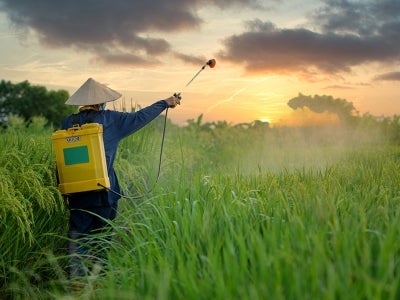
In China, India, Sri Lanka, and Vietnam the partnership worked with tea growers to reduce the use of agrochemicals for weed control, reducing costs to farmers and improving soil health.
The project taught smallholder tea farmers how to distinguish harmful weeds from harmless ones that can be left in the ground. This helps protect from erosion, improves soil organic content through mulching (a powerful source of plant nutrition as well as a carbon storage agent) and significantly improves soil moisture – all key for crop production. With fewer weeds to extract, farmers can remove harmful species manually, avoiding poisonous herbicides, and reducing the costs of maintaining a healthy crop.
The future of certification
Building on the successes of these initiatives, the Rainforest Alliance rolled out its enhanced Certification Program in July 2020.
“After two years of far-reaching consultation with farmers, companies, non-government organizations, governments, and researchers – with input from more than a 1,000 people in nearly 50 countries – we have raised our ambitions,” says Rainforest Alliance’s Director for Landscapes and Communities, Edward Millard.
“This means strengthened requirements for farms and companies, better monitoring and assurance systems, advanced digital innovations and, at the heart of it all, a vision of sustainability as a shared journey of continuous improvement,” he says.
Farms will work towards increasing compliance with the standard while learning new techniques based on using the services that nature provides.
“The great thing about this new scheme is that it is much more doable for farmers than previous schemes. It’s also at the core of a new Global Environment Facility-funded sustainable agriculture landscapes project in India, expected to start in 2021,” says UNEP biodiversity and land management expert Max Zieren.
This piece was originally published by the UN Environment Programme.