

Photo credit: Saipullah Srg/Shutterstock
Sustainability is the pathway to recovery and resilience
The global phenomena of the COVID-19 pandemic is tangible evidence of how an imbalanced ecosystem can bring massive economic damage and social inequalities, putting millions of lives and businesses at risk. In the long run and, more importantly, the environmental divide and degradation of natural ecosystems pose a significant risk to the viability of the global economic system.
Countries and companies that depend on natural resources are consistently facing the risk of their depletion, supply-chain disruption and soaring input costs. The capability of business leaders to show resilience in securing supply chains, and the well-being of employees and stakeholders, is being tested – bearing witness to the imperative that natural ecosystems and the global commons underpin global economic stability, and humanity itself.
Against this backdrop, business as usual will not suffice. Companies must embrace change by integrating the UN Sustainable Development Goals (SDGs) into their DNA. In Indonesia, the SDGs have become the national development agenda by presidential decree. However, the old social contract and division of labor, where government is solely responsible for creating a sustainable environment, needs to be rewritten. Governments and businesses must be collectively responsible for putting green measures and sustainability at the center of the economic recovery.
In navigating towards recovery, we at the Sintesa Group have devoted our business to sustainable excellence, focused on building value that is based on sustainability. As a strategic investment holding company, we simultaneously connect the dots regarding how to synergize our business model, product services innovation, codes of conduct, policies, value chain, and employees. We ensure that no one is left behind. This takes commitment, built on noble values that encourage empowerment, co-operation, and solidarity.
We see sustainability not merely as action on corporate responsibility but as a strategic imperative, shifting focus from business efficiency alone towards innovation that creates sustainable value. To do this, we have developed our own SDGs road map called Sintesa for the Earth. It is a solid commitment for how our company, comprised of 17 subsidiaries, can pave the way to maintaining, cultivating, developing, and exceeding a work culture for nature preservation, while incorporating sustainability into our business model and value chain.
We are including initiatives in the value chain that major on health and well-being (SDG 3), water and energy efficiency (SDGs 6 and 7), waste management and the circular economy, responsible consumption and production, and handling hazardous waste in compliance with mandatory regulation (SDG 12).
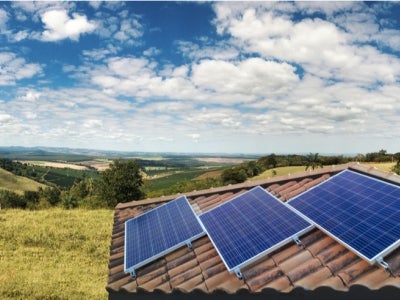
We are also expanding our business towards the green economy through our portfolio in clean and renewable energy, steam gas power plants, and geothermal.
Looking further ahead, we recognize that tourism is among the sectors hardest hit by COVID-19. So we want to use this opportunity to accelerate our efforts to build sustainable ecosystems by developing an eco-tourism business in one of Indonesia's special tourism economic zones (SDG 8).
This is one of our most ambitious business models, with a commitment to empower local communities; monitor and regulate coastal and maritime activities; ensure climate resilience; recycle waste; and preserve biodiversity, historic sites, and cultural heritage, while developing eco-friendly infrastructures. We are also developing a strategic plan to protect environmentally sensitive ecosystems in the zone's preservation area.
We believe people form the foundation of our initiatives. Our commitment to sustainability is shared by our employees. We continually arrange knowledge management programs to ensure that they can all adopt a sustainable culture in their daily and professional lives. Small acts multiply to create hope. Sustainability is about raising awareness of how everyone plays an important role in creating a better future by making wise lifestyle decisions.
We believe sustainability is not a solo journey. It is about working collectively, building dialogue and inspiring action-oriented collaboration among industry (SDG 17).
Therefore, by establishing the Indonesia Business Council for Sustainable Development, we – together with government partners, companies, academia, and civil society organizations – have started discussions on building capacity and joint actions to promote sustainable sourcing, including using resources efficiently, tackling food loss and waste, handling plastic and hazardous waste, and protecting forest and biodiversity.
That is why we signed up to the “Nature is everyone’s business” call to action on collective actions and policies to reverse nature loss in this decade. Only by working together will we be able to protect, restore and sustainably use our natural resources for a safer, fairer, and sustainable future
While the world embraces a new normal after the pandemic, we believe that reimagining how business can transform to take a sustainable pathway is essential for long-term recovery.
Businesses need to envision themselves as global solutions, not part of the problem. These efforts will require strong support from leaders and employees. Of course companies will make mistakes or experience failures as part of this process: these should be not be dismissed but regarded as opportunities to learn.
This piece was originally published for the GEF-Telegraph Partnership.