Photo credit: IISD/ENB
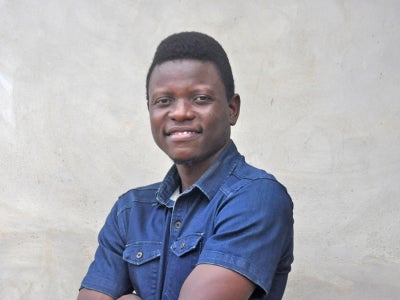
Aliou Mustafa, a solar energy expert from the Sabga, a Fulani Indigenous pastoralist community in the northwest region of Cameroon, is a member of the GEF’s Indigenous Peoples Advisory Group. In a GEF Voices interview, he shared lessons from his work to provide Indigenous Peoples with renewable energy resources and training that is empowering them in the fight against climate change and biodiversity loss.
What do you do for a living? What are you currently focused on?
I came from the Sabga, a Fulani Indigenous pastoralist community in the northwest region of Cameroon. I am a solar energy expert working to provide Indigenous communities with renewable energy resources and to empower Indigenous Peoples in the fight against climate change and biodiversity loss. I train and reinforce the capacities of Indigenous Peoples in renewable energy solutions in a just, fair, and inclusive way while educating them on the aspect of Free Prior and Informed Consent in relation to other projects carried out on Indigenous lands and territories.
How did you get into this line of work?
This emerged from my passion and love for driving change within my community as an Indigenous person who lived through these challenges of lack of electricity to study at night or benefit from opportunities that others may take for granted like watching television while growing up. I have always wanted to give back to my community and help build a generation of Indigenous engineers and environmental defenders who can solve community problems, taking care to leave no one behind.
Is there a GEF-funded project or program that is close to your heart?
One of the most important projects or initiatives funded by the GEF Small Grants Program was the Indigenous Peoples Fellowship in 2018–2019. I was selected to build my capacity and the capacities of Mbororo pastoralists and Baka forest-dwelling communities in environmental conservation and renewable energy solutions such as solar power training and installation, the use of clay energy saving ovens, organic agriculture, livestock rearing and milk transformation into dairy products, and the documentation and intergenerational knowledge transfer of traditional knowledge about plants to treat both animal and human ailments. This became part of the DNA of my transition and work. I subsequently trained hundreds of Indigenous Peoples, including women and youth, in many parts of Cameroon. Today, many of them have acquired new skills, strengthened their capacities, and experienced mindset transformation, supporting efforts to achieve global environmental benefits.


Aliou Mustafa training communities on solar technology use. Photos courtesy of Aliou Mustafa
What life lessons has your job taught you?
I have come to understand that the world needs Indigenous Peoples and local communities in protecting our planet, since a significant majority of the world's biodiversity is found within Indigenous lands and territories. Leaving Indigenous Peoples out of decision-making platforms on environmental issues leads to the violation of Indigenous Peoples rights, land, and territories when their voices are not taken into consideration as custodians and protectors of most of the world’s biodiversity.
The state of the global environment is concerning. What gives you hope?
The world's environmental challenges cannot be addressed while leaving Indigenous Peoples and local communities behind. This collaboration in good faith is reassuring to us Indigenous Peoples because it recognizes that we are part of the solution the world has been looking for.
What are you looking forward to at the Convention on Biological Diversity’s COP17 in Armenia?
As an Indigenous person and a member of the GEF Indigenous Peoples Advisory Group, I hope to bring the voices and priorities of Indigenous Peoples to international negotiation tables. Above all, I hope we will continue building a better world — not simply as beneficiaries, but as partners in the process.