Image credit: GEF
The Global Environment Facility is welcoming four new members to its Indigenous Peoples Advisory Group (IPAG), expanding regional and youth representation at a moment of renewed commitment to Indigenous Peoples’ rights and leadership, both of which are central to achieving a healthy planet for healthy people. The expansion of IPAG reflects the ambition of GEF-9 and a simple principle: achieving a healthy planet for healthy people requires Indigenous Peoples’ knowledge, governance, and leadership. These contributions are central to the GEF’s mission. By broadening representation within IPAG, the GEF is reinforcing its commitment to ensuring that Indigenous Peoples help shape the decisions that affect their lands, territories, and futures.
The announcement is being made around the anniversary of the adoption of the United Nations Declaration on the Rights of Indigenous Peoples (UNDRIP), which affirms Indigenous Peoples’ rights to self-determination and to participate in decisions that affect their lands, territories, and futures. Expanding IPAG is one way the GEF works to uphold these rights.
Meet the new IPAG members
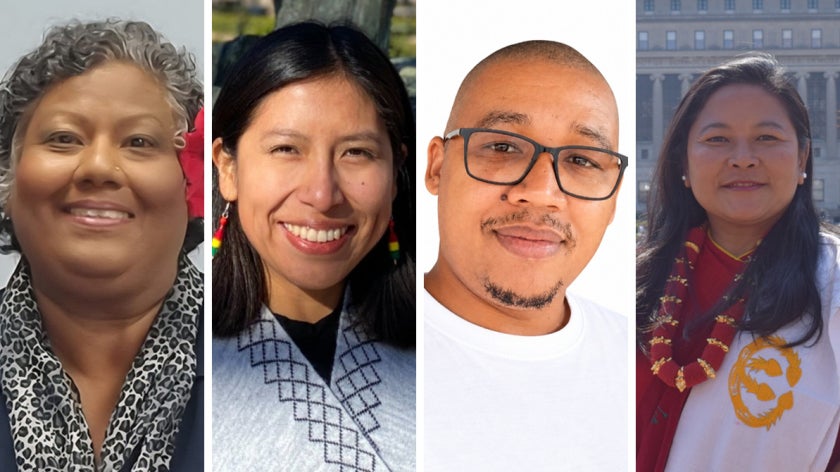
The four new members will join IPAG’s continuing members. They were selected for their community-level and global experience, which spans the breadth of the conventions the GEF serves, and for the ways their profiles strengthen IPAG’s regional, gender, intergenerational, and thematic balance. With their guidance, IPAG will help deliver on the GEF-9 commitments to Indigenous Peoples.
Aleeyah Ali of Trinidad and Tobago will co-represent Latin America and the Caribbean; Dayana Blanco of Bolivia will represent Indigenous youth in a newly created seat, strengthening knowledge exchange and leadership across generations; Job Morris of Botswana will co-represent Africa; and Ritu Thapa of Nepal will co-represent Asia.
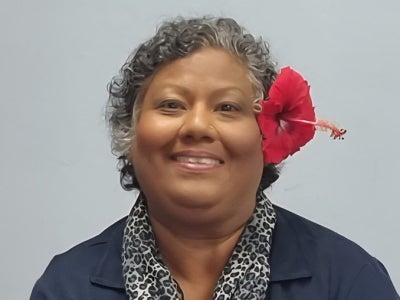
Aleeyah Amanda Ali is a Warao and Kalina/Karina woman and is the Co-founder and Executive Director of the Foundation for Heritage Preservation and Legacy Creation in Trinidad and Tobago. Her work as an Indigenous systems architect and as the Founder and Lead of the Integrated Science, Culture, and Community for Action in Preservation & Education (I-SCAPE) initiative reflects her motivation to join IPAG.
“My motivation to join IPAG is to strengthen the role of Indigenous Peoples as full partners in environmental governance, ensuring that GEF policies and programs are culturally grounded, equitable, and effective. I am especially committed to advancing community-led solutions and strengthening connections between local realities and global environmental decision-making.”
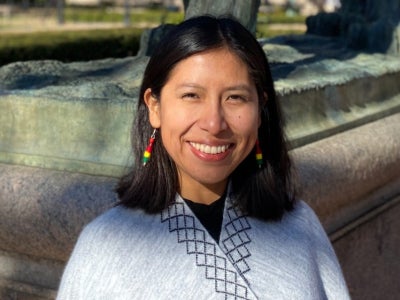
Dayana Blanco is an Aymara woman from Oruro, Bolivia, who is trained in law, international trade, and peace and conflict resolution. Since 2019, she has co-led the Uru Uru Team, restoring the Lake Uru Uru wetlands after decades of contamination and biodiversity loss. Her team plants native totora reeds to remediate the water and rebuild habitats for native species, including Andean flamingos, while running environmental education programs for Aymara children and youth.
“Growing up watching mining and mercury contamination affect our water, I learned early that our knowledge and our voice have to be part of these decisions. I’m honored to bring that experience, and the perspective of Indigenous youth, into IPAG."

Job Morris is a San/Bushman rights and environmental practitioner from D’Kar, Ghanzi District, Botswana, and the Founder and Executive Director of the San Youth Network (SYNet), an Indigenous-led organization serving San youth, mainly in South Africa, Botswana, and Namibia. He also serves as an officer at the Community Leaders Network of Southern Africa, supporting the Southern African Development Community (SADC) on land tenure, climate justice, and natural resource governance, and sits on the Africa Steering Committee of the International Land Coalition.
“Our people have long cared for this land, and that knowledge deserves a place in decisions about its future. I’m glad to bring that experience to IPAG, for our communities and for the generations coming after us."
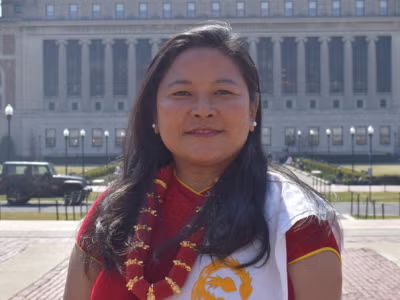
Ritu Thapa is a Magar lawyer and founding member of the Indigenous Women Legal Awareness Group (INWOLAG), which she helped establish in Nepal to provide legal aid and to lead strategic litigation defending Indigenous Peoples’ rights, particularly those of women and vulnerable communities. For more than two decades, she has worked directly with Indigenous communities across Nepal’s mid-hills, river basins, and Terai regions, helping to ensure that their land rights and their right to Free, Prior, and Informed Consent are respected in the context of hydropower and conservation initiatives.
“I am happy to contribute my experience to this advisory group, always thinking about our right to live on a healthy planet and about environmental governance that is rights-based, gender-responsive, and grounded in our lived realities."
Together with IPAG’s continuing members—Giovanni Reyes, Chair and co-representing Asia; Alisi Rabukawaqa, serving as IPAG Deputy Chair and representing Small Island Developing States; Aliou Mustafa, co-representing Africa; Viviana Figueroa, co-representing Latin America and the Caribbean; Galina Angarova, independent advisor; and alternate GEF implementing agency advisors Carlos Perez-Brito of the World Bank and Terence Hay-Edie of the GEF Small Grants Program—these four new members broaden IPAG’s composition and strengthen its capacity to guide and support the delivery of the GEF-9 aspirational targets on Indigenous Peoples and beyond.