
shutterstock_708706465.jpg
Platform for Accelerating the Circular Economy
“The transition towards a circular economy is estimated to represent a $4.5 trillion global growth opportunity by 2030, while helping to restore our natural systems,” Naoko Ishii, CEO and Chairperson of the Global Environment Facility (GEF) and Frans van Houten, CEO of Philips write in a joint article for the World Economic Forum (WEF).
“There are many good initiatives around the world that are taking us in the direction of a circular economy, but the reality is that we are still far from the system-wide change that we need,” they continue. “This is why we are excited to be co-chairing the Platform for Accelerating the Circular Economy (PACE), which brings together leaders from both the public and private sectors to take concerted action. The time to make a global impact is now.”
At a press conference in Davos today, the two CEOs highlighted a new report from PACE, WEF and the UN E-Waste Coalition that says global e-waste production is on track to reach 120 million tonnes per year by 2050 if current trends continue. According to a WEF news release, with only 20% of the electronics and plastics formally recycled each year, this looming health and environmental catastrophe also represents a unique $62 billion economic opportunity.
To help address the e-waste challenge, and grasp the opportunity of the circular economy, today the Nigerian Government, GEF and UN Environment announced a $2-million investment to kick off the formal e-waste recycling industry in Nigeria. The new investment is expected to leverage over $13 million in additional co-financing from the private sector.
“To achieve a world without waste, we must radically rethink our relationship with natural resources and key economic systems. We need to adopt a new way of doing business that brings together all actors along the supply chain, and across entire industries. PACE is starting to do just that,” said Naoko Ishii. “The Nigerian electronic waste project will put this new way of thinking into practice and is an approach we hope other African countries will adopt.”
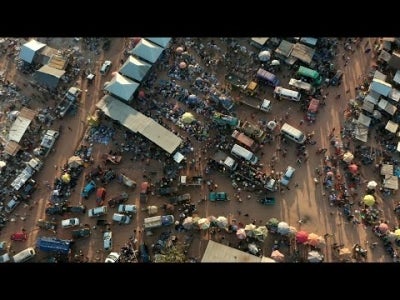
According to the International Labour Organization, up to 100,000 people work in the informal e-waste sector in Nigeria. This investment will help to create a system which formalizes these workers, giving them safe and decent employment while capturing the latent value in the 500,000 tonnes of e-waste disposed of in Nigeria annually.
PACE is also focused on building a circular economy in the food system and transforming the plastics economy. A new report released today by the Ellen MacArthur Foundation highlights the potential of a circular economy for food, which could generate $2.7 trillion in benefits annually for society and the environment, while averting an estimated 5 million deaths by 2050.
Earlier in the week, The Circularity Gap Report 2019 revealed that the global economy is only 9% circular - just 9% of the 92.8 billion tonnes of minerals, fossil fuels, metals and biomass that enter the economy are re-used annually.
In the report, Naoko Ishii, writes “The circular economy is a topic whose time has come, and I see more and more interest in this topic for both governments and businesses around the world. It is nothing less than a blueprint for a fundamental transformation of our economic system—a transformation that that is urgently needed, that is entirely possible, and desirable.”
PACE was developed and hosted on the World Economic Forum platform in 2018. A new phase in its evolution is beginning as the World Resources Institute helps to scale-up the initiative and establish an action hub in The Hague, with assistance from the Netherlands Ministry of Infrastructure and Water Management, and several other public- and private-sector partners.
The circular economy is recognized as a unique opportunity for the GEF to pursue a suite of environmental benefits through public-private partnerships. The GEF’s comparative advantage is its convening power and its ability to help bring together the actors in complicated and interlinked global supply chains—including governments, industry, and the finance sector—to scale-up existing experiences with the circular economy.