

Main Issue
The pace of climate change is accelerating, bringing with it rising sea levels and more frequent and intense storms, droughts, and floods.
Extreme temperatures and weather events risk inflicting lasting economic and societal damage, particularly in the world’s least developed countries which are ill-equipped to guard against climate change and recover from its worst effects.
In 2001, the 194 parties to the United Nations Framework Convention on Climate Change (UNFCCC) set out to address this challenge by establishing the Least Developed Countries Fund (LDCF) – the only facility exclusively dedicated to helping these countries adapt to new climate realities.
The LDCF, along with the Special Climate Change Fund (SCCF), is mandated to serve the Paris Agreement. Both funds are managed by the Global Environment Facility.


What We Do
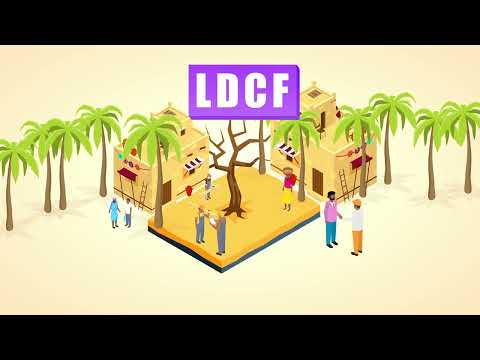
The LDCF is enabling Least Developed Countries to prepare for a more resilient future. LDCF funding helps recipient countries address their short-, medium-, and long-term resilience needs and reduce climate change vulnerability in priority sectors and ecosystems.
LDCF support helps countries implement National Adaptation Programs of Action (NAPAs) – country-driven strategies for addressing their most urgent adaptation needs. It also supports the implementation of National Adaptation Plans (NAPs), and the Least Developed Countries work program under the UNFCCC.
The LDCF works with partner agencies to bolster technical and institutional capacity at the national and local level, to create a policy environment that encourages investment in adaptation solutions, to reduce systemic barriers to progress, and to promote innovation and private sector engagement.
LDCF funding has addressed a range of adaptation priorities in the LDCs across a range of vulnerable sectors including agriculture, water, disaster risk management, coastal zone management, infrastructure, and sustainable alternate livelihoods among others. The GEF-8 adaptation strategy for the LDCF/SCCF aims to focus on agriculture, food security and health, water, climate information services, and nature-based solutions. The strategy aims to further support LDCs in addressing their adaptation priorities by scaling up access to adaptation finance, strengthen innovation and private sector engagement, and foster whole-of-society approach and partnerships for inclusion.
Results
The LDCF has one of the largest portfolios of Least Developed Country adaptation projects in the international finance community. As of June 30, 2024, the LDCF has financed 423 projects and programs with nearly $2.1 billion in grants. This has directly benefited more than 74 million people and strengthened the management of nearly 14.1 million hectares of land for climate resilience.
LDCF projects cut across a range of themes and geographies. For instance:
- An initiative in Nepal saw the creation of farm field schools with trained facilitators to teach farmers about climate adaptation. Meanwhile, areas at high risk from climate change benefited from the introduction of green agriculture technologies for low-till crop planting, and stress-tolerant plant and animal varieties.
- Work in Senegal aims to restore and conserve degraded landscapes in two target areas – one urban and one rural – and to strengthen institutional understanding and governance of ecosystem-based adaptation initiatives. Meanwhile, local entrepreneurs and small enterprises will be trained, equipped, and encouraged to create sustainable and climate-resilient businesses.
- In the small island state of Comoros, resilience-building efforts have centered around reforestation and the revitalization of watershed areas. Teams have also aimed to underline the value of healthy forests with local communities by providing saplings to safeguard farmland against soil erosion as well as by planting income-generating fruit trees and species sought by the pharmaceutical industry for medicines and cosmetics.
- In The Gambia, the LDCF has supported the strengthening of climate change early warning systems to allow for rapid responses to extreme weather events – an effort that included improvements to the structure and capacity of the national hydrometeorology agency. The project also worked to integrate climate change awareness into national policies and to raise community awareness of climate-linked risks, potential impacts to their livelihoods, and the value of adaptive steps such as using weather and climate information to make informed agricultural decisions.
- LDCF-backed work in Togo is protecting biodiverse and populous coastal areas from the marine sand and gravel mining, and increasingly severe floods and storms. On-the-ground teams have helped coastal communities find green and climate-resilient alternative income sources – from ecotourism to the production of medicinal plants – and will offer training and support to ensure adaptation and conservation are embedded in local and national policies and programs.
- A $6 million LDCF grant helped Sao Tome and Principe join the West Africa Coastal Area (WACA) Resilience Investment Program. The program’s activities included the “Safety at Sea” initiative for fishermen who must contend with increasingly strong and unpredictable storm surges, as well as intense squalls and dry fog. The program will also support training of marine meteorologists on storm surge modelling, and the establishment of a marine meteorological station – or system of buoys – to improve monitoring and forecasting. This project complements a $20 million GEF Trust Fund project and was recognized at the 2017 One Planet Summit as an innovative initiative to support resilience.
Looking Ahead
The GEF Secretariat is working to redouble efforts to help all LDCs access LDCF funding to help meet their most pressing adaptation needs. Consultations with relevant countries are underway to assist them in accessing resources.
The GEF is also working closely with the Green Climate Fund to explore joint adaptation initiatives, based on the Long-term Vision of Complementarity between the GCF and GEF. Such efforts are drawing on the LDCF’s unique strengths, including its exclusive focus on LDCs, its fast approval and implementation processes, and its experience in managing risk and investing in innovation.
The GEF-8 Programming Strategy on Adaptation to Climate Change for the LDCF and SCCF and Operational Improvements for the Period 2022-2026 began from July 1, 2022 after it was approved by the LDCF/SCCF Council. The new strategy aims to double allocation of finance to LDCs to $20 million per LDCs from $10 million in the GEF-7 period, in line with the Glasgow Climate Pact which calls for doubling of climate finance for adaptation by 2025. The strategy also recognizes the fact that many LDCs face unique and pronounced capacity constraints in planning and programming for climate adaptation actions. Therefore, support will be provided via a Dedicated Program to build and maintain capacity for project planning and preparation, so that LDCs can strive for a higher level of ambition in climate action.


