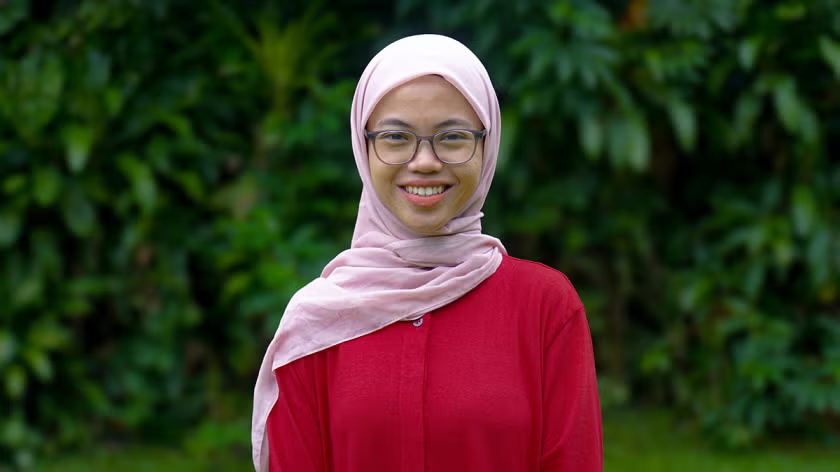
Photos courtesy of Seruni Lestari
Seruni Lestari is an environment and land-based development planner from Indonesia who is working to build a more climate-resilient future in Indonesia. In a GEF Voices interview, shared life lessons from her work to widen perspectives and approaches to land restoration, primary forest conservation, and landscape management in the context of rising temperatures.
What do you do for a living? What are you currently focused on?
I am an urban and regional planner by training, and I currently work as a researcher in environmental and land-based development planning at Landscape Alliance.
My work focuses on building climate resilient livelihoods across multiple jurisdictions in Indonesia through integrated, spatially explicit development planning. This has encompassed many exciting and important programs, such as mainstreaming gender-responsive climate change policies and a ridge-to-reef approach into spatial planning, developing a sustainable jurisdiction framework with relevant stakeholders, and facilitating capacity building for local government officials and land managers on inclusive and evidence-based functional landscape management.
I am also currently involved in developing a community of practices for a remote-sensing land use and land cover monitoring tool that aims to provide access to high-quality spatial data for land managers working on conservation, restoration, and sustainable use.
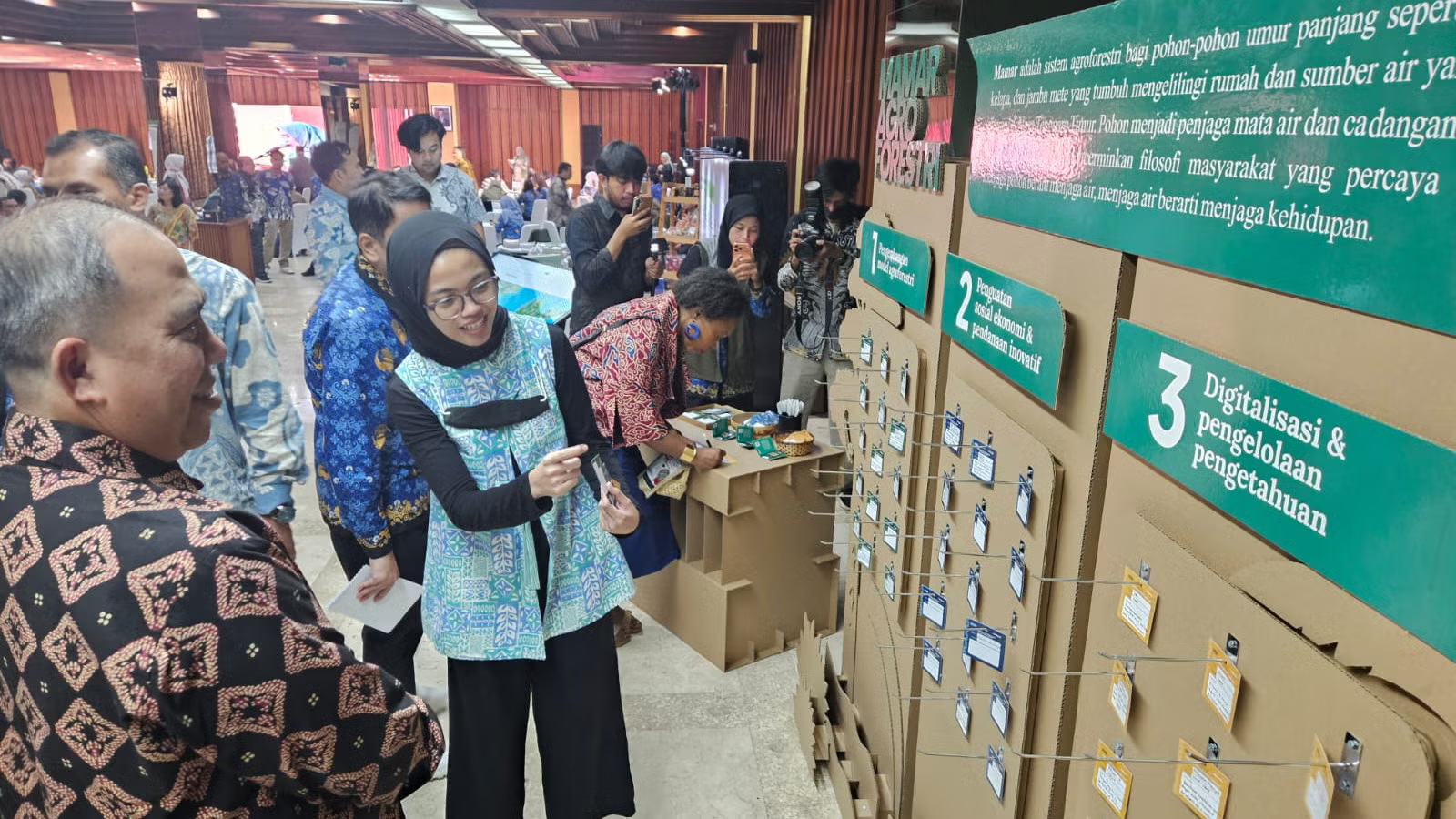
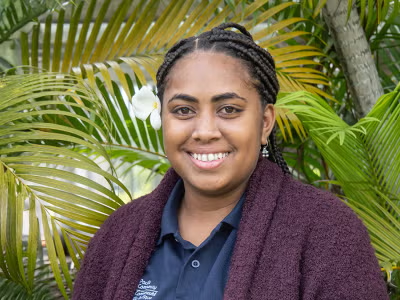
At the Agroforestri Indonesia seminar, Seruni invites everyone to share their ideas and visions on building agroforestry in Indonesia.
How did you get into this line of work?
Having once dreamt of becoming a village head that governs land in a closely tied community, I have always believed that land use planning is key to pushing towards sustainable development and creating climate-resilient communities.
When I worked as a planner at a local government agency, I learned that building integrated and spatially explicit policy is complex: it requires a multi-jurisdictional perspective for policy alignment, capacity building of local government officials, and engagement with relevant local stakeholders to promote evidence-based decision-making.
When I joined ICRAF, I was lucky to further sharpen my development planning perspective. One of my first projects was mainstreaming climate change considerations into development planning across diverse landscape ecosystems in Indonesia.
Is there a GEF-funded project or program that is close to your heart?
The GEF-8 Southeast Asia and the Pacific Forests Integrated Program targets driving global systems change through the conservation of primary forests. This project is close to my heart as much of the primary forest in Indonesia remains outside of protected areas. These forests tend to be most vulnerable to deforestation threats and climate change but face significant governance challenges. Promoting a systems change in Indonesia through the GEF program could have profound impacts for globally important non-protected primary forests in the country and in Southeast Asia at large.
Has anyone you have met through your work made a lasting impact on you?
I’ve noticed that working environments that focus on competition tend to bring about small, fragmented gains, whereas environments that focus on building a shared vision tend to create lasting change.
I was astonished when I first met Ibu Sonya Dewi, a principal scientist at ICRAF who was serving as the Indonesia country program director at the time, yet still paid attention to my work and gave me trust and guidance as a young policy researcher exploring Indonesia’s peatland governance.
From then on, I have learned that fostering a supportive working environment for young researchers to grow allows for sustained commitment and fresh ideas to flourish. This experience continues to shape how I communicate with my colleagues.
What life lessons has your job taught you?
My work has shown me what meaningful participation looks like in everyday work: it is built through trust, listening, and continually building capacity. When you trust young researchers to handle programs, listen to smallholder farmers and local governments about their climate-related concerns, and design capacity building programs with women in mind, you can empower local stakeholders and create development plans that truly resonate with their needs.
The state of the global environment is concerning. What gives you hope?
We face many uncertainties about the climate, the economy, and what the future holds. I am hopeful that progress can be made to reduce these uncertainties by breaking the data barriers that lead to policy silos. Access to data and robust remote sensing technology allows us to better understand the land and resources that we have, supporting planners and policy makers with spatially explicit and evidence-based decision-making. Platforms for open-source spatial data sharing give me hope that more equal outcomes can be achieved through collaboration.
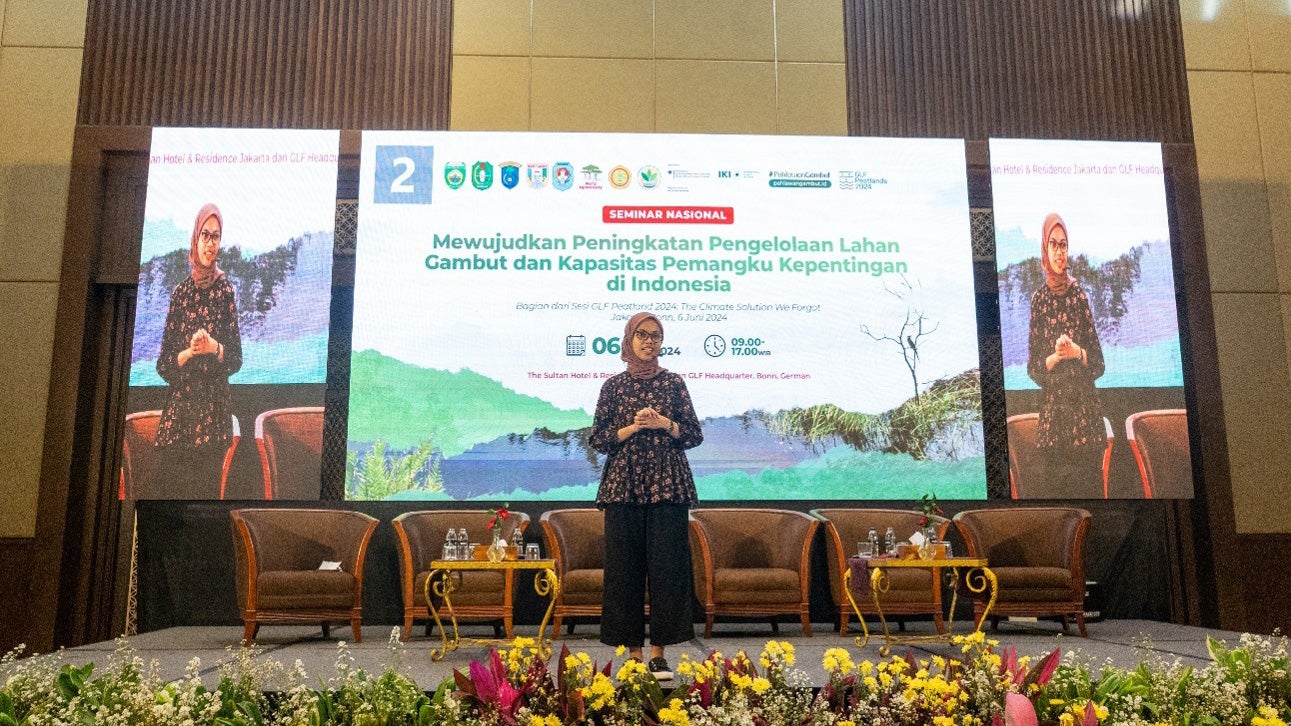
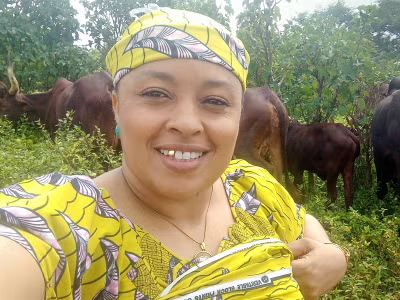
Seruni promoting Pegari (Peta Jalan Gambut Lestari), an initiative helping communities sustainably manage peatland ecosystems, at PeatIMPACT’s national seminar.
What advice would you give a young person interested in a career like yours?
Never be afraid to explore beyond your realm of knowledge. As a planner by training, my work and passion for integrated land governance has allowed me to collaborate with ecologists, gender advocates, and spatial modelers to find solutions for complex climate issues in Indonesia, such as halting commodity-driven deforestation and promoting local solutions to enhance food security. At the end of the day, the climate crisis requires us to talk to people from all sorts of backgrounds to solve problems collectively. A non-linear approach to planning and development policy combined with a strong curiosity for diverse perspectives may be just what we need!